Contents
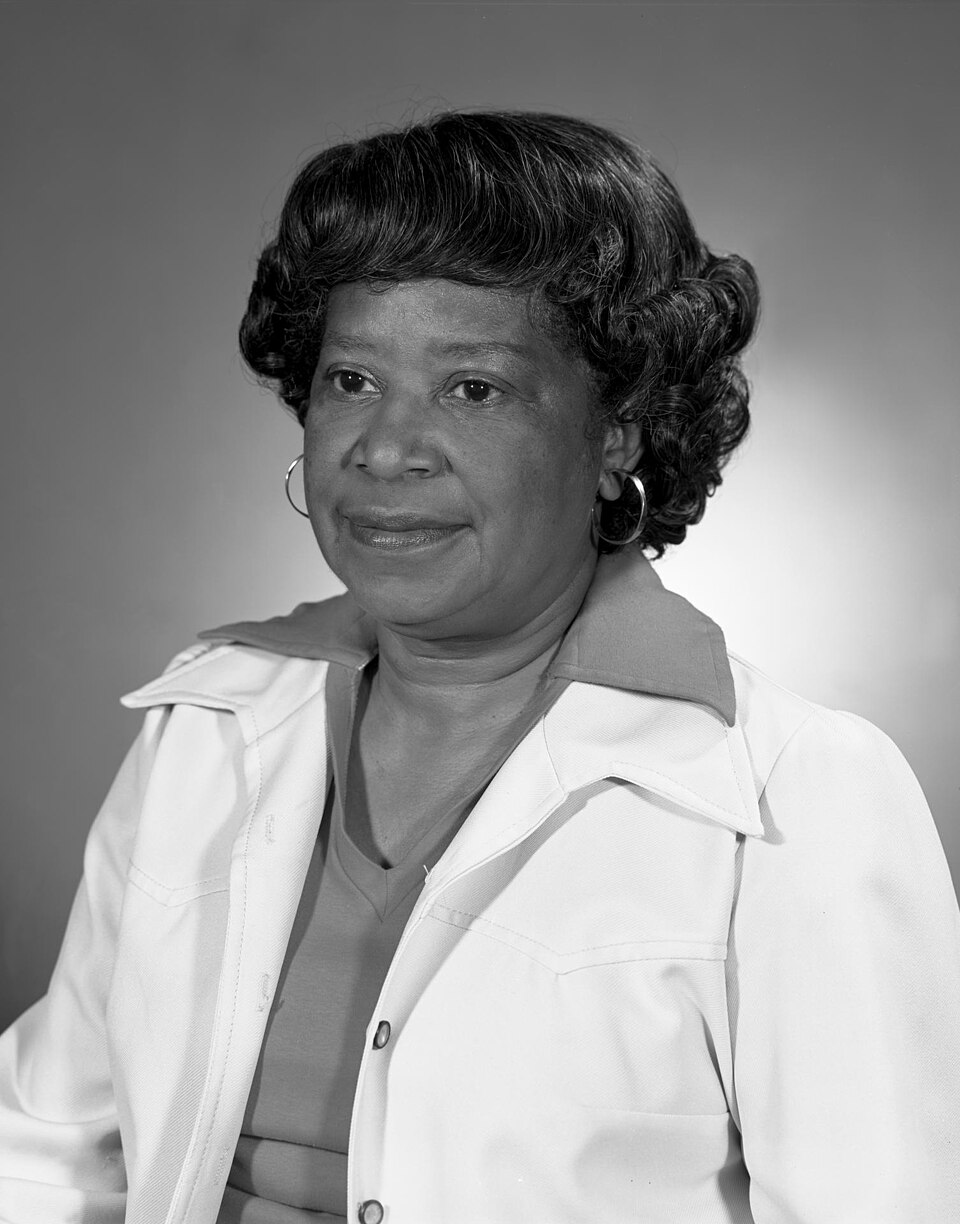
Mary Jackson
Becoming NASA’s first Black woman engineer and helping open technical careers to others.
Supersonic airflow · Skin friction research
- Born
- 9 April 1921
- Birthplace
- Hampton, United States
- Died
- 11 February 2005
More people
Mary Jackson
Jackson worked on aerodynamics at Langley, moving from mathematical calculations into engineering. Later she changed roles to improve opportunities for women and minority employees at NASA.
Early life
Hampton roots
Grew up in Hampton, Virginia, and graduated from Hampton Institute in 1942.
Before aeronautics
Worked as a mathematics teacher and in administrative jobs before joining Langley.
Career
- 1951
West Area Computing
Joined NACA as a mathematician in the segregated computing group led by Dorothy Vaughan.
- 1958
Engineering promotion
Completed additional training and became an aerospace engineer.
- 1979
Equal opportunity work
Moved into a role supporting women’s advancement before retiring in 1985.
Contributions
Supersonic airflow
Co-authored research on airflow over cones at supersonic speeds.
Skin friction research
Contributed to studies of turbulent airflow and friction at high speeds.
Pressure and surface shape
Co-authored work comparing theoretical pressure distributions with experiments.
Beyond engineering
Community teaching
Helped young people build a small wind tunnel and encouraged their interest in science.
Girl Scouts
Served as a Girl Scout leader for more than thirty years.
Sources & photo credit
Life, career and references ↗Institutional biography and contributions ↗Photo: NASA Langley Research Center, Bob Nye. Public domain · Original image. Cropped and displayed in monochrome.
.jpg)