Contents
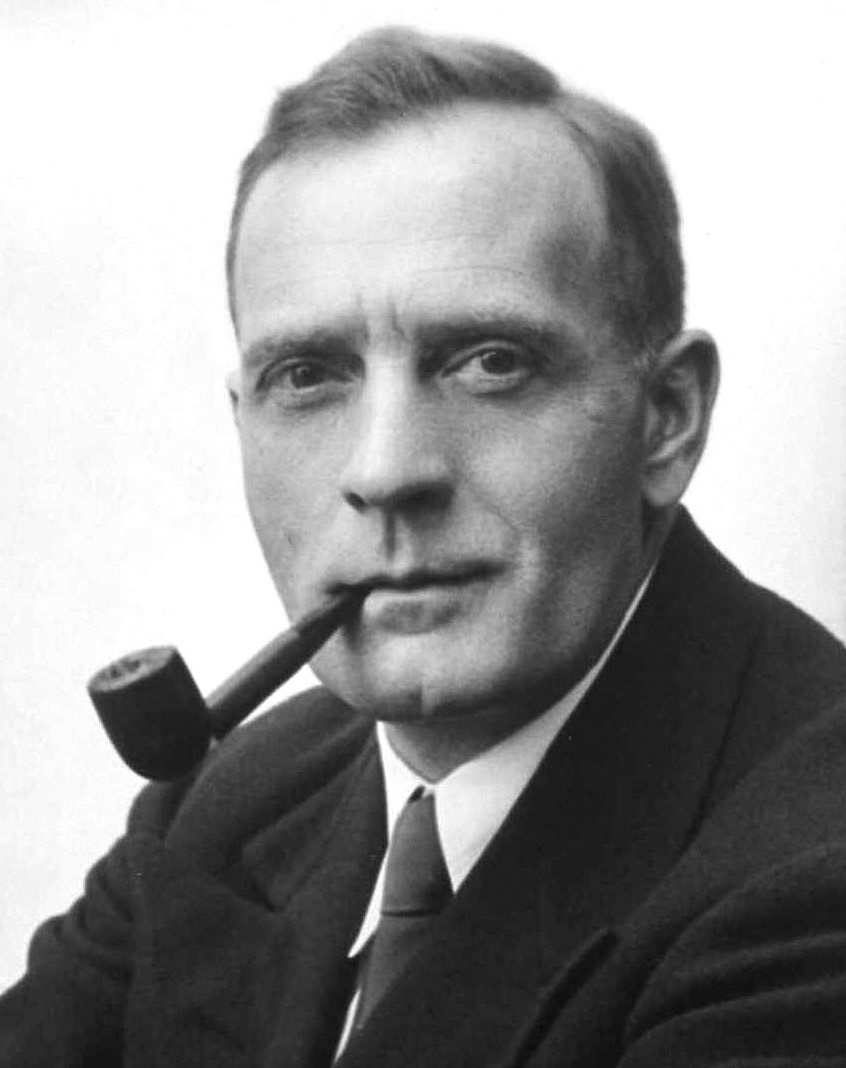
Edwin Hubble
Showing that galaxies exist beyond the Milky Way and helping establish the expanding universe.
Andromeda · Hubble Space Telescope
- Born
- 20 November 1889
- Birthplace
- Marshfield, Missouri, United States
- Died
- 28 September 1953
More people
Edwin Hubble
Edwin Hubble was an American astronomer whose observations greatly enlarged the known universe. Working at Mount Wilson, he measured distances to galaxies and connected those distances with their observed recession.
Early life
Missouri and Illinois
He was born in Missouri and grew up partly in the Chicago area, combining strong academic and athletic interests.
An indirect route
After studying at Chicago, he went to Oxford as a Rhodes Scholar and studied law before returning to astronomy.
Career
- 1917
Astronomy doctorate
He completed doctoral research at the University of Chicago before wartime military service.
- 1919
Mount Wilson
He joined the observatory and used its powerful telescopes to investigate nebulae.
- 1920s
Galaxies and distances
His work showed Andromeda lay far beyond the Milky Way and organised galaxies by shape.
- 1929
Distance and recession
He published evidence linking galaxy distances and recession velocities.
Contributions
Andromeda Cepheids
Variable stars supplied evidence that Andromeda was a separate galaxy.
Galaxy classification
He organised galaxies into familiar elliptical and spiral categories.
Distance–velocity relation
Observations supported the picture of a universe expanding on large scales.
Beyond the lab
A shared scientific story
His work drew on Henrietta Swan Leavitt’s distance method and redshift measurements by Vesto Slipher, among others.
A telescope namesake
NASA’s Hubble Space Telescope, launched in 1990, honours his contribution to observational astronomy.
Sources & photo credit
Biography ↗Life and work ↗Photo: Johan Hagemeyer. Public domain · Original image. Cropped and displayed in monochrome.
.JPG)