Contents
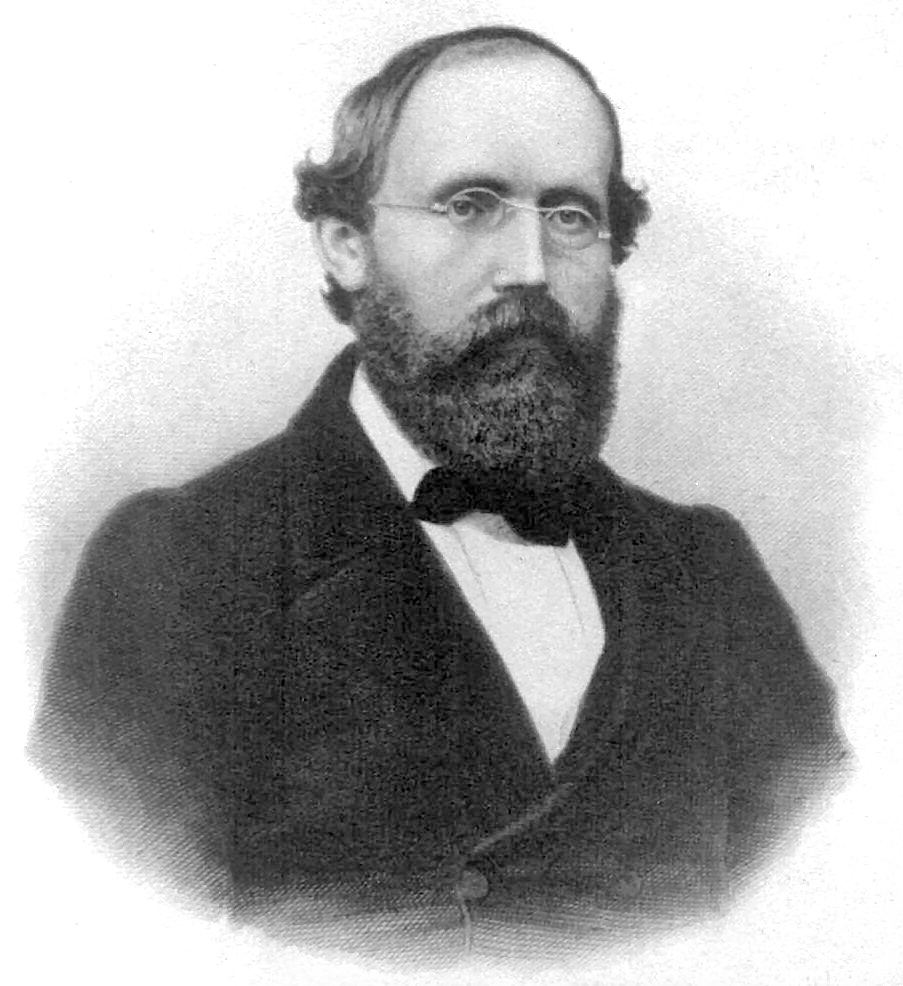
Bernhard Riemann
Developing the geometry later used in general relativity and posing the Riemann hypothesis about prime numbers.
Riemann surfaces · Curved spaces
- Born
- 17 September 1826
- Birthplace
- Breselenz, Germany
- Died
- 20 July 1866
More people
Bernhard Riemann
Riemann’s short career changed how mathematicians study curved spaces, complex functions and prime numbers. His ideas supplied tools that later became central to Albert Einstein’s account of gravity.
Early life
A pastor’s family
Grew up in a large family in the Kingdom of Hanover and initially prepared to study theology.
Turning to mathematics
Studied at Göttingen and Berlin, learning from Carl Friedrich Gauss and other leading mathematicians.
Career
- 1851
Doctoral research
Completed his Göttingen doctorate on complex functions.
- 1854
A new geometry
Delivered his qualifying lecture on the foundations of geometry.
- 1859
Göttingen professorship
Succeeded Dirichlet as a full professor, before illness cut short his career.
Contributions
Riemann surfaces
Used surfaces to make the behaviour of complex functions easier to understand.
Curved spaces
Explained how geometry could extend beyond flat space and three dimensions.
Prime numbers
Connected the distribution of primes with the zeta function and proposed his famous hypothesis.
Beyond mathematics
Family life
Married Elise Koch in 1862; they had a daughter.
Journeys for health
Tuberculosis led him to spend time in Italy, where he died in 1866.
Sources & photo credit
Life, career and references ↗University of St Andrews biography ↗Photo: See source. Public domain · Original image. Cropped and displayed in monochrome.
