Contents
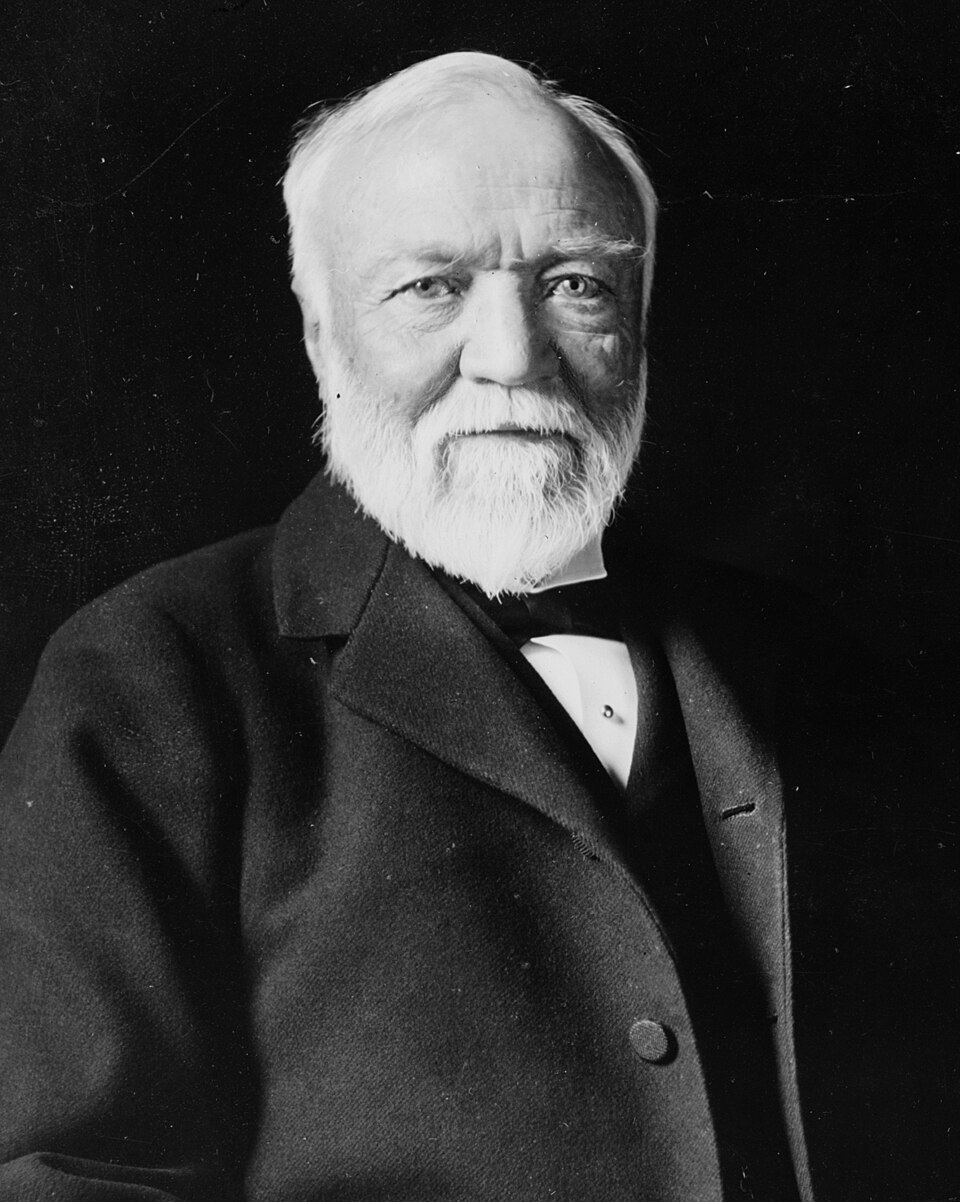
Andrew Carnegie
Building a vast American steel business and funding thousands of public libraries with the proceeds.
Carnegie libraries · The Gospel of Wealth
- Born
- 25 November 1835
- Birthplace
- Dunfermline, Scotland
- Died
- 11 August 1919
More people


Andrew Carnegie
Andrew Carnegie rose from a Scottish immigrant mill worker to a leading American steel industrialist. After selling his steel interests, he devoted much of his wealth to libraries, education and peace initiatives. His philanthropy coexists with a troubled record of labour conflict.
Early life
Weaving family
Grew up in Dunfermline as industrial change undermined his father’s handloom work.
Emigration
Moved to Pennsylvania with his family in 1848 and worked in a cotton mill before becoming a telegraph messenger.
Career
- 1853–1865
Railroad career
Worked for the Pennsylvania Railroad and began making industrial investments.
- 1870s–1892
Building steelworks
Expanded steel production and consolidated operations as Carnegie Steel.
- 1901
Selling the business
Sold his steel interests to the group creating US Steel.
- 1901–1919
Philanthropic work
Concentrated on libraries, universities, scientific institutions and international peace.
Companies & projects
Carnegie libraries
Funded library buildings in communities across several countries.
The Gospel of Wealth
Argued that wealthy people should administer their fortunes for public benefit.
Carnegie Corporation
Established a foundation supporting education and the spread of knowledge.
Beyond work
Homestead strike
The deadly 1892 confrontation at his steelworks, managed by Henry Clay Frick, remains central to criticism of Carnegie’s labour record.
Peace advocacy
Supported arbitration and funded the Peace Palace in The Hague, although his efforts could not prevent the First World War.
Sources & photo credit
Life, career and references ↗Institutional biography and career record ↗Photo: Theodore C. Marceau. Public domain · Original image. Cropped and displayed in monochrome.
_(2).jpg)