Contents
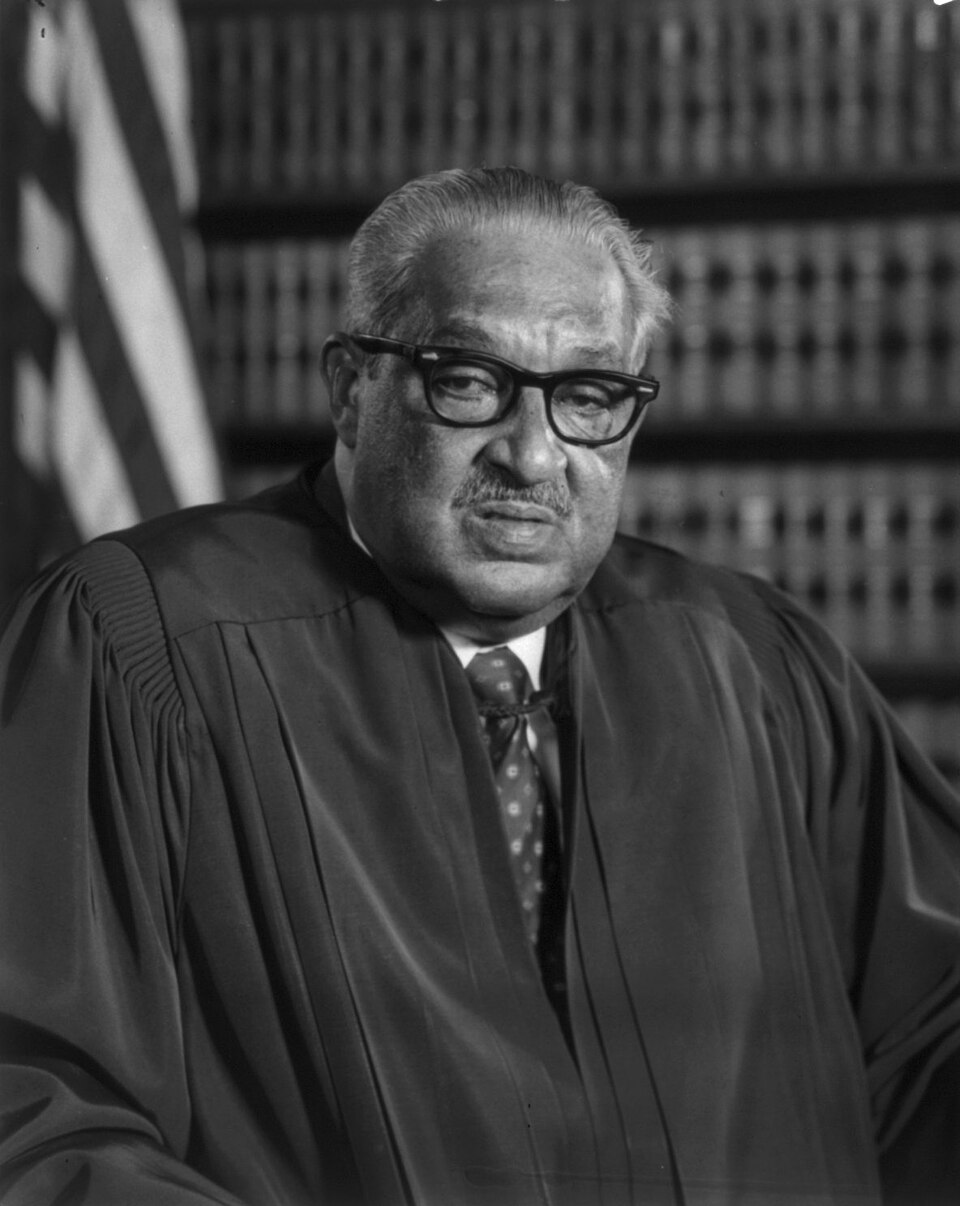
Thurgood Marshall
Arguing Brown v. Board of Education and becoming the first Black US Supreme Court justice.
Sweatt v. Painter · Brown v. Board of Education
- Born
- 2 July 1908
- Birthplace
- Baltimore, Maryland, United States
- Died
- 24 January 1993
More people

Thurgood Marshall
An American lawyer and judge whose courtroom work challenged racial segregation. He later brought that civil-rights experience to the country’s highest court.
Early life
Baltimore childhood
Grew up in a family that encouraged debate and interest in law.
Legal education
Attended Lincoln University and graduated from Howard University School of Law in 1933.
Career
- 1930s–1940s
Civil-rights lawyer
Joined NAACP legal work and became the first leader of its Legal Defense Fund.
- 1954
Brown argument
Led the legal team challenging segregation in public schools.
- 1961–1965
Federal service
Became an appeals judge, then US solicitor general.
- 1967–1991
Supreme Court
Served as an associate justice.
Cases & contributions
Sweatt v. Painter
Challenged exclusion from the University of Texas law school.
Brown v. Board of Education
Helped win the ruling against segregated public schooling.
Supreme Court appointment
Became the Court’s first Black justice.
Beyond the courtroom
Mentor
Howard dean Charles Hamilton Houston strongly influenced his litigation strategy.
Judicial commitments
Frequently defended civil liberties and opposed capital punishment.
Sources & photo credit
Life, career and references ↗Photo: Robert S. Oakes. Public domain · Original image. Cropped and displayed in monochrome.
