Contents
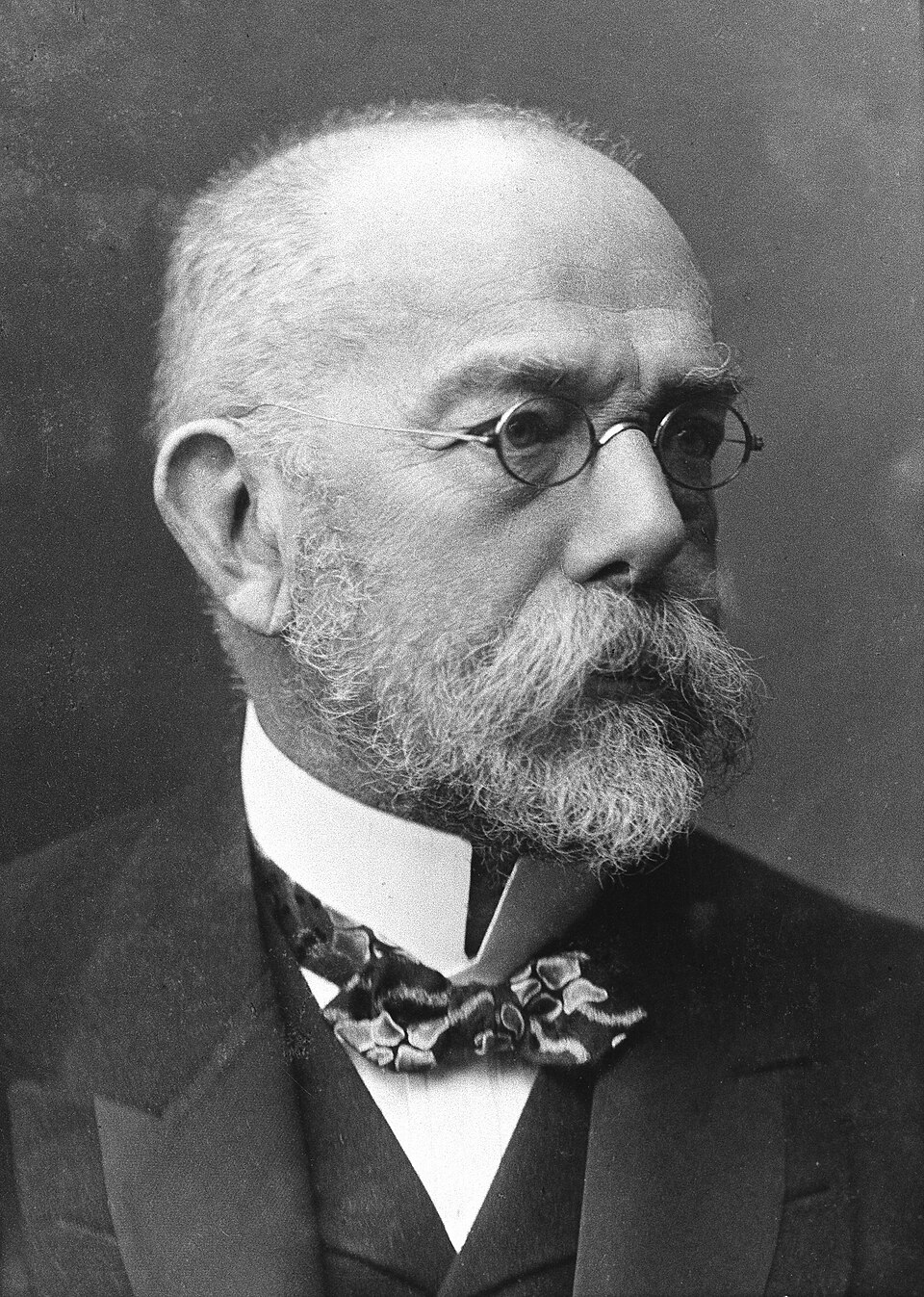
Robert Koch
Identifying the tuberculosis bacterium and helping establish that specific microbes cause specific diseases.
Anthrax experiments · Tuberculosis bacterium
- Born
- 11 December 1843
- Birthplace
- Clausthal, Germany
- Died
- 27 May 1910
More people
Robert Koch
German physician whose laboratory methods helped establish modern bacteriology. His tuberculosis discovery earned the 1905 Nobel Prize; his attempted treatment with tuberculin proved ineffective.
Early life
Mining-town childhood
Grew up in Clausthal, where his father worked in mining administration.
Medical studies
Studied at Göttingen and qualified as a physician in 1866.
Career
- 1872
District doctor
Practised in Wollstein while conducting experiments in a small laboratory.
- 1880
Berlin research
Joined the Imperial Health Office and investigated infectious diseases.
- 1891
Institute director
Became the first director of the institute later named after him.
- 1905
Nobel Prize
Received the medicine prize for his work on tuberculosis.
Contributions
Anthrax experiments
Traced the bacterium’s life cycle and demonstrated its role in disease.
Tuberculosis bacterium
Announced identification of the organism responsible for tuberculosis.
Koch’s postulates
Helped establish experimental criteria linking a microorganism to a disease.
Beyond the lab
Tuberculin controversy
His proposed tuberculosis remedy failed as a treatment; tuberculin later became useful in testing.
Colonial research
His sleeping-sickness experiments in East Africa used toxic drugs on African patients and form a deeply troubling part of his legacy.
Sources & photo credit
Life, career and references ↗Institutional biography and research ↗Robert Koch Institute — colonial legacy ↗Photo: Unknown author Unknown author. Public domain · Original image. Cropped and displayed in monochrome.
