Contents
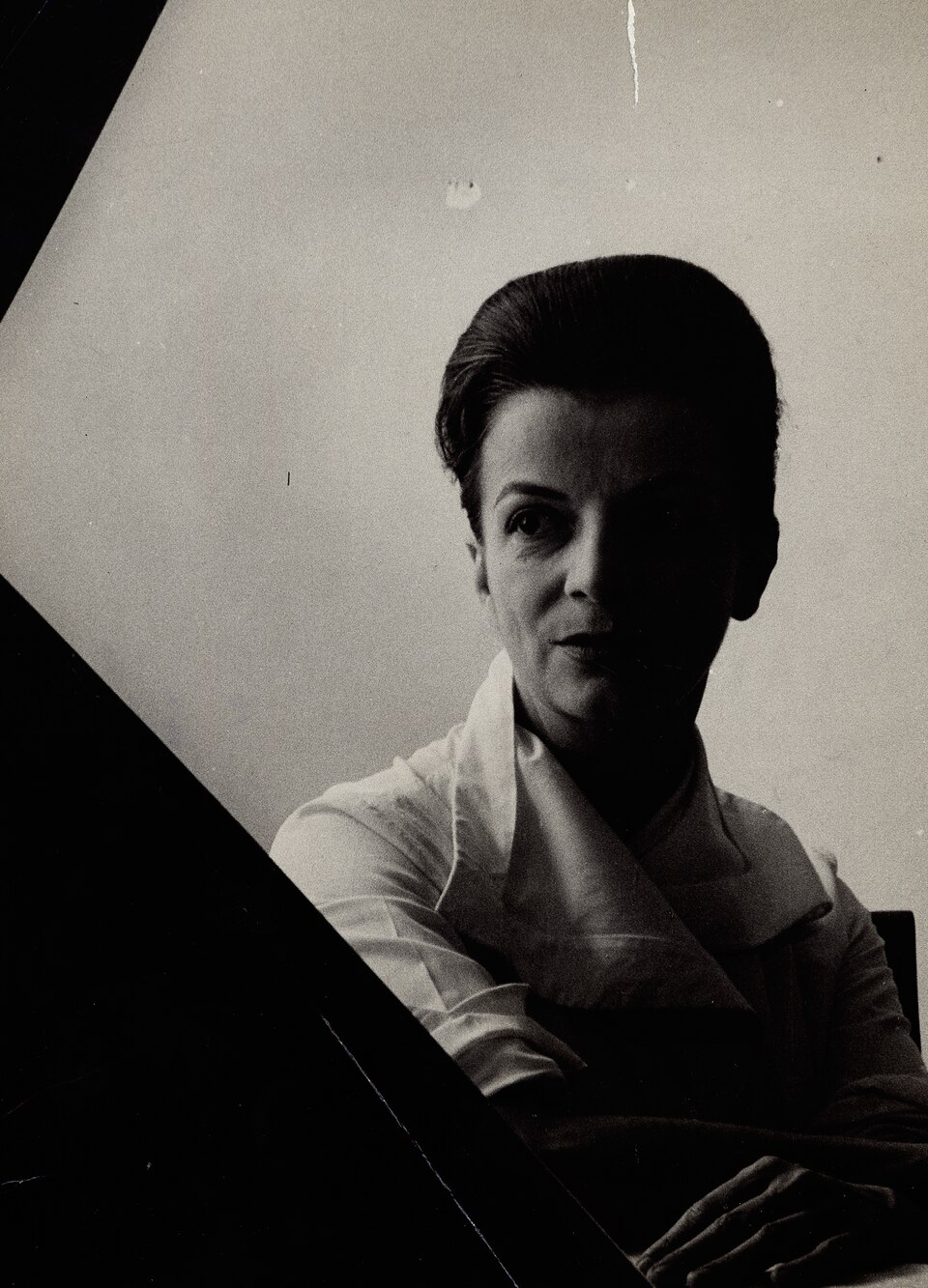
Lygia Clark
Turning sculpture into an experience that viewers could physically change.
Bichos · Caminhando
- Born
- 23 October 1920
- Birthplace
- Belo Horizonte, Brazil
- Died
- 25 April 1988
More people
Lygia Clark
Lygia Clark moved from geometric painting to hinged sculptures, sensory objects and participatory experiments. A founder of Neo-Concretism, she challenged the separation between artwork and observer.
Early life
Belo Horizonte
Born into a well-off family and later moved to Rio de Janeiro.
Training
Studied with Roberto Burle Marx in Brazil and Fernand Léger in Paris.
Career
- 1947
Art studies
Began formal painting studies after starting a family.
- 1959
Neo-Concrete movement
Helped establish a movement treating art as a lived experience.
- 1970s
Paris teaching
Led participatory experiments while teaching at the Sorbonne.
- Late 1970s
Relational practice
Returned to Brazil and developed individual sessions using sensory objects.
Selected work
Bichos
Hinged metal sculptures invite viewers to alter their forms.
Caminhando
A participant cuts a paper Möbius strip in a continually changing action.
Stone and Air
A pebble moves on a bag of air held in the participant’s hands.
Beyond work
Family
Had three children with engineer Aluízio Clark Ribeiro.
Psychological inquiry
Her later practice drew on psychoanalysis and the relationship between bodily sensation and memory.
Sources & photo credit
Life, career and references ↗Museum of Modern Art — artistic career ↗Photo: Unknown photographer / Arquivo Nacional Collection. Public domain · Original image. Cropped and displayed in monochrome.