Contents
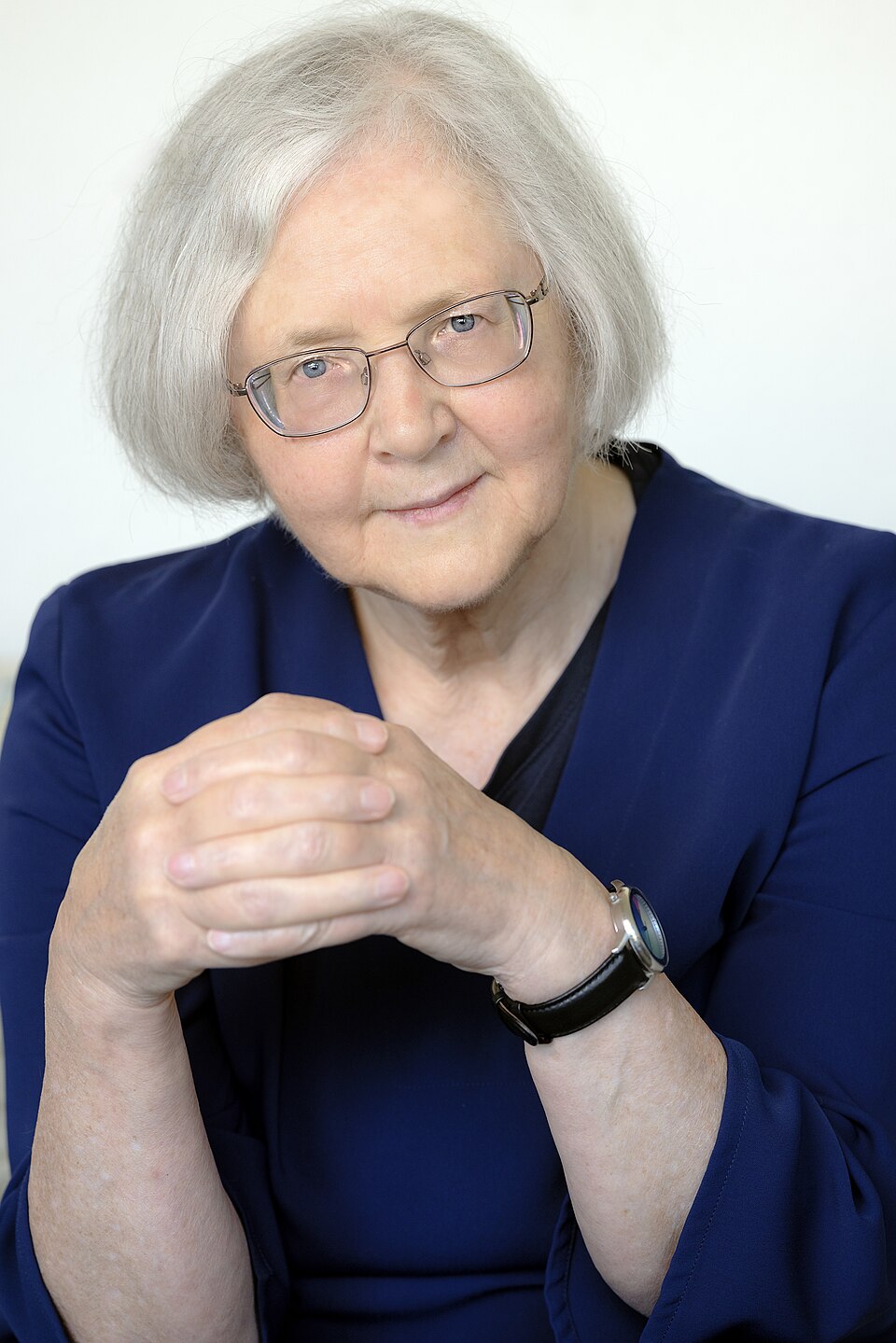
Elizabeth Blackburn
Discovering how chromosome ends are protected and co-discovering the enzyme telomerase.
Telomere sequences · Protective chromosome ends
- Born
- 26 November 1948
- Birthplace
- Hobart, Australia
More people
Elizabeth Blackburn
Elizabeth Blackburn is an Australian-American biologist whose research revealed how cells maintain the ends of chromosomes. She shared the 2009 medicine Nobel with Carol Greider and Jack Szostak. Their findings connected a basic molecular puzzle to ageing and cancer biology.
Early life
Tasmanian childhood
Grew up in a family of doctors with an early fascination for animals and biology.
Melbourne and Cambridge
Studied biochemistry in Melbourne before doctoral research with Frederick Sanger in Cambridge.
Career
- 1975–1977
Yale research
Studied chromosome-end DNA in the single-celled organism Tetrahymena.
- 1978–1990
Berkeley laboratory
Built a research group and worked with Carol Greider on telomerase.
- 1990
UCSF
Moved to the University of California, San Francisco.
- 2016–2018
Salk presidency
Served as president of the Salk Institute.
Contributions
Telomere sequences
Identified repeated DNA sequences at chromosome ends.
Protective chromosome ends
With Jack Szostak, showed that telomere sequences could protect DNA in yeast.
Telomerase
With Carol Greider, discovered the enzyme that replenishes chromosome ends.
Beyond the lab
Bioethics debate
Served on the US President’s Council on Bioethics and publicly disputed its treatment of scientific evidence after her 2004 removal.
Family and research
Has written about combining a scientific career with family life and the support of her husband, scientist John Sedat.
Sources & photo credit
Life, career and references ↗Institutional biography and career record ↗Salk leadership transition, January 2018 ↗Photo: Christopher Michel. CC BY-SA 4.0 · Original image. Cropped and displayed in monochrome.
