Contents
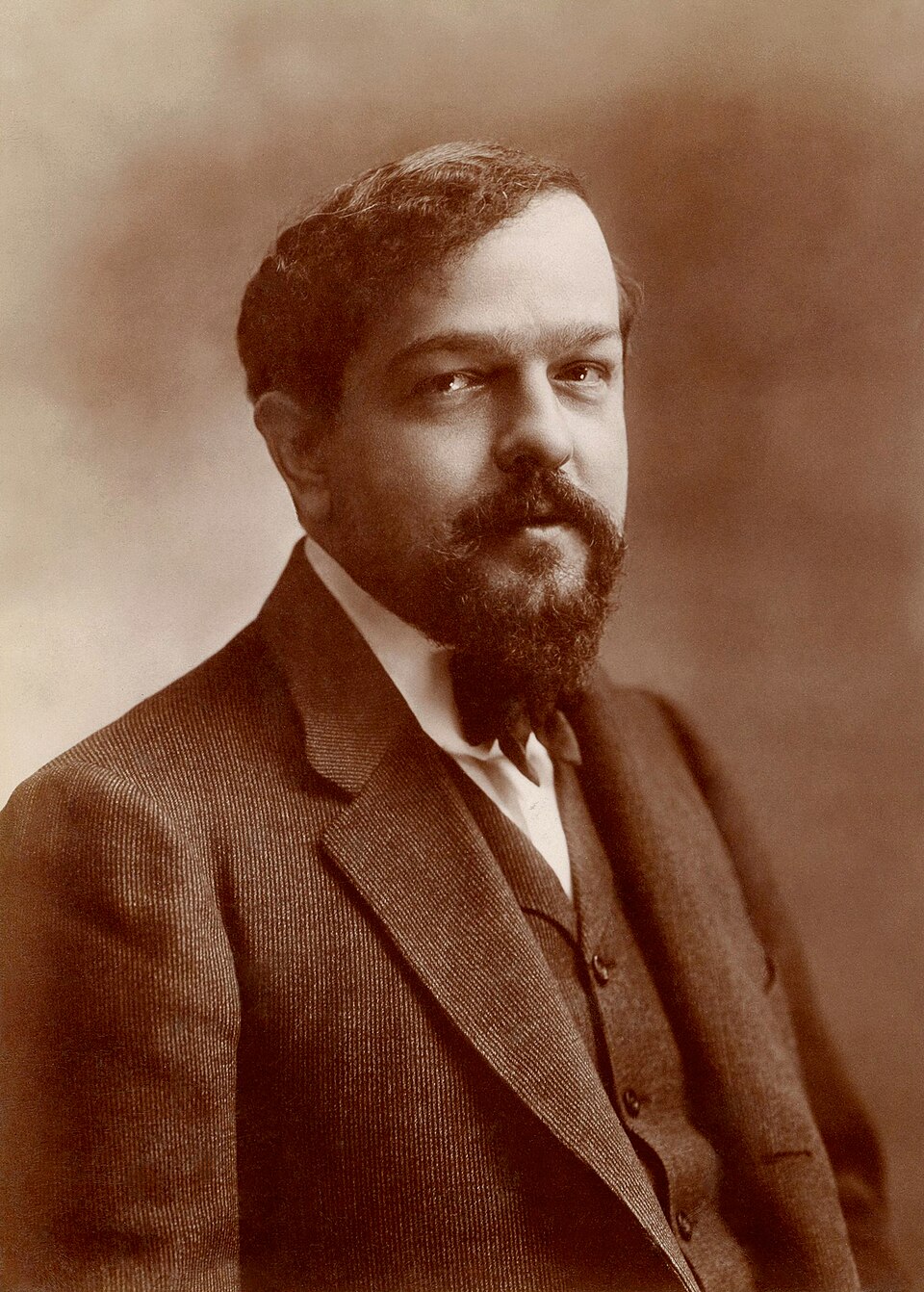
Claude Debussy
Expanding musical colour through works such as La mer and Clair de lune.
Pelléas et Mélisande · French orchestral music
- Born
- 22 August 1862
- Birthplace
- Saint-Germain-en-Laye, France
- Died
- 25 March 1918
More people


Claude Debussy
Claude Debussy was a French composer whose harmony, rhythm and instrumental colours challenged inherited musical expectations. His work often suggests atmosphere and movement without relying on conventional dramatic development.
Early life
Modest beginnings
Born into a family with little professional musical background.
Paris Conservatoire
Entered at ten and gradually shifted his focus from piano performance to composition.
Career
- 1884
Prix de Rome
Won the composition prize and spent time at the Villa Medici in Rome.
- 1890s
Independent voice
Developed an orchestral and piano language distinct from dominant German traditions.
- 1902
Operatic breakthrough
The premiere of Pelléas et Mélisande established him more widely.
- 1900s–1910s
Later work
Continued writing orchestral, piano and chamber music despite worsening health.
Selected work
Prélude à l’après-midi d’un faune
An orchestral response to Mallarmé’s poem, opening with a sinuous flute line.
La mer
Three orchestral sketches evoke changing motion and light at sea.
Suite bergamasque
Its published version includes the piano piece Clair de lune.
Beyond work
Literary interests
Poetry and Symbolist writing supplied subjects and creative affinities.
Family
His daughter Claude-Emma, known as Chouchou, inspired the dedication of Children’s Corner.
Sources & photo credit
Biography ↗Life and work ↗Photo: Adam Cuerden. Public domain · Original image. Cropped and displayed in monochrome.
