Contents
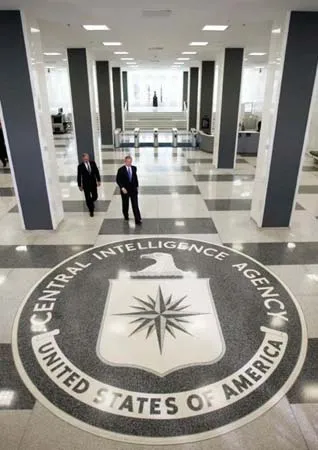
CIA
Foreign espionage and covert operations, including interference in governments and documented assassination plots.
Intelligence analysis · Covert action · United States government
- Established
- 18 September 1947
- Headquarters
- Langley, Virginia, United States
More people

CIA
The Central Intelligence Agency collects and analyses foreign intelligence and conducts covert operations. Its history includes technical innovation, secret political intervention, assassination planning and abuses exposed through investigations. Its authority comes from the US government; its activities have had consequences far beyond US borders.
Origins
From wartime intelligence
The Office of Strategic Services was a wartime predecessor. After its dissolution, a post-war reorganisation led to a permanent civilian foreign-intelligence agency.
Source ↗Established in 1947
The National Security Act created the CIA. It began operating on 18 September 1947 within the new national-security structure.
Source ↗Intelligence and action
Collecting information and assessing it are different from covert action, which aims to influence events while concealing US sponsorship. The CIA carries out both functions.
Source ↗History
- 1947
- 1950s
Cold War expansion
Covert political operations became a major part of the agency’s work, including interventions in Iran and Guatemala.
Source ↗ - 1975–1976
Congressional investigation
The Church Committee investigated abuses and the adequacy of oversight.
Source ↗ - 2000s
Post-9/11 detention
A secret detention and interrogation programme became a major focus of subsequent investigation.
Source ↗ - 2014
Public torture report
A declassified executive summary and findings made substantial parts of the Senate investigation public.
Source ↗ - 2025
Major operations
Iran: Operation TPAJAX
The CIA worked with British intelligence and Iranian allies to remove Prime Minister Mohammad Mossadegh. The coup strengthened the Shah. Declassified planning records describe US authorisation and the mechanisms used.
Source ↗Guatemala: PBSUCCESS
A CIA operation helped overthrow President Jacobo Árbenz. The documentary record includes propaganda, pressure and support for opposition forces. The intervention altered Guatemala’s political trajectory.
Source ↗Congo: targeting Lumumba
The CIA prepared an assassination operation and funded efforts to replace Patrice Lumumba. He was subsequently executed by Katangan forces with Belgian involvement.
Source ↗Cuba: Bay of Pigs
The CIA trained and equipped an exile invasion force aimed at overthrowing Fidel Castro. The invasion failed, demonstrating the limits as well as the scale of covert power.
Source ↗Chile: electoral intervention
Covert US support for Eduardo Frei included funding, organisational assistance and propaganda against Salvador Allende. Internal records credited that support, while President Johnson publicly described the election as an internal Chilean matter.
Source ↗MKULTRA
The research programme included experiments involving drugs and unwitting subjects. Later investigations faced gaps because records had been destroyed. The 1977 Senate hearing is an important surviving source.
Source ↗Secret detention and interrogation
The post-9/11 programme held detainees at secret overseas sites and used abusive methods. The 2014 Senate study documented its operation and sharply criticised its treatment of prisoners and accountability.
Source ↗Power & accountability
Who authorises covert action?
Covert action takes place under presidential authority and applicable law. Decisions involve political leadership as well as agency officers.
Source ↗Director and headquarters
John Ratcliffe became director on 23 January 2025. The agency is headquartered in Langley, Virginia.
Source ↗No general police role
The CIA has no police, subpoena or law-enforcement powers. Its statutory role centres on foreign intelligence.
Source ↗The Church Committee
The Senate investigation of 1975–1976 exposed intelligence abuses, including assassination plots, and helped establish permanent congressional intelligence oversight. Its findings also concerned agencies other than the CIA.
Source ↗Detention and torture
The Senate Intelligence Committee’s 2014 study examined secret detention and abusive interrogations. Its conclusions challenged claims about effectiveness and described misleading information supplied to overseers. The CIA disputed parts of the findings.
Source ↗Use of Nazi war criminals
Declassified records examined by National Archives historians document Allied protection or use of Nazi war criminals after the Second World War.
Source ↗Limits of the public record
Classification, redaction and destroyed files can prevent a complete reconstruction. The 1977 MKULTRA hearing illustrates how investigators had to work with surviving records after earlier destruction.
Source ↗Sources & photo credit
Origins ↗Powers ↗Iran ↗Guatemala ↗Congo ↗Cuba ↗Chile ↗Church ↗Mkultra ↗Torture ↗Nazis ↗Director ↗Covert ↗Original photograph. Cropped and displayed in monochrome.